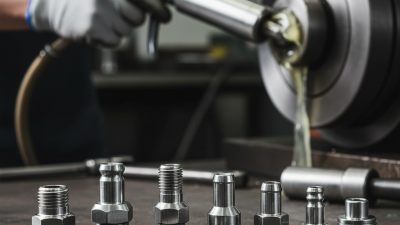
Choosing the best grease gun can significantly enhance your lubrication efficiency in 2026. As we advance, the demand for high-quality, reliable tools becomes paramount. It’s not just about convenience; it’s about performance and longevity. The right grease gun ensures that your machinery operates smoothly and extends its lifespan.
Many options are available on the market, but identifying the best grease gun requires careful consideration. Before purchasing, think about the size, power source, and design. Some users have reported issues with battery life in electric models. Others express frustration over the difficulty in finding replacement cartridges. These concerns highlight the importance of user experience in product selection.
Investing in the best grease gun means recognizing potential pitfalls. You want a tool that offers both reliability and comfort. Inevitably, there will be trade-offs. Some guns may excel in portability but lack power. Reflecting on these aspects can guide your choice. With the right insights, you can navigate the evolving landscape of grease guns and make an informed decision.
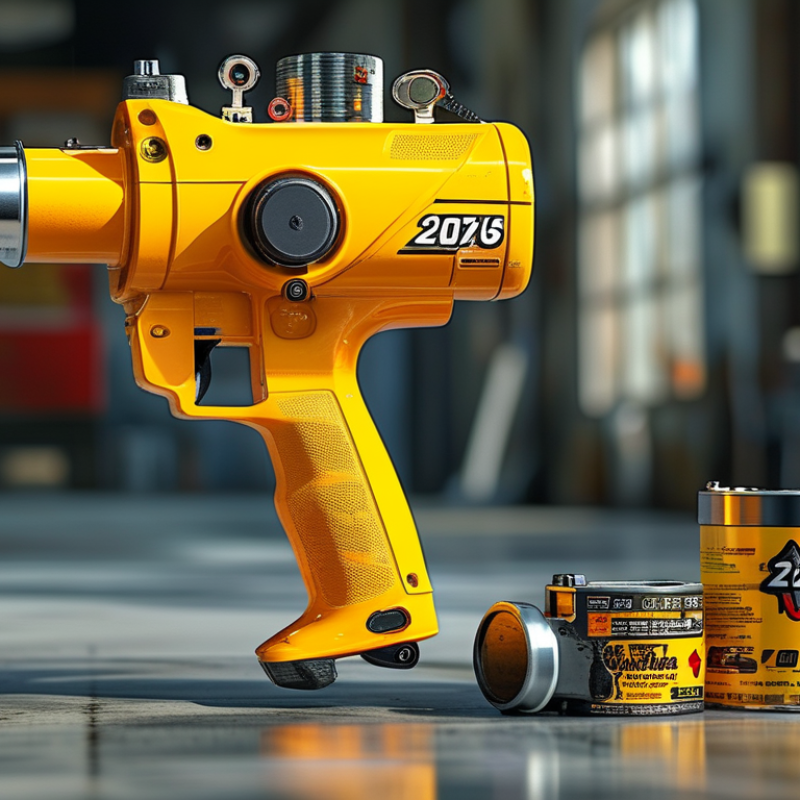
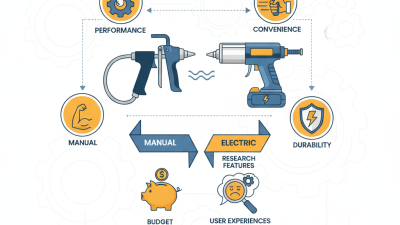
Grease guns come in various types, each suited for different applications. Manual grease guns are simple and cost-effective. They require physical effort to dispense grease. This can lead to uneven application, especially in high-volume tasks. Users often report fatigue from repetitive pumping. However, they can be effective for small jobs and tight spaces.
Pneumatic grease guns are powered by air compressors. They allow for faster lubrication and can handle larger grease volumes. According to industry reports, pneumatic grease guns can reduce application time by up to 50% compared to manual models. Their power means more uniform application, but they require maintenance and a reliable compressor.
Electric grease guns offer convenience and efficiency. They are designed for continuous use and often include features such as adjustable pressure and automatic shut-off. Users find them less tiring than manual options. Nevertheless, they can be heavy and may have higher upfront costs. A study from Lubrication Magazine noted that electric grease guns increase productivity by 30% in some industrial environments. Choosing the right type ultimately hinges on your specific lubrication needs and application frequency.
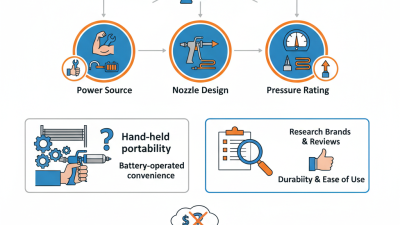
This chart displays the lubrication efficiency scores of three types of grease guns: Manual, Pneumatic, and Electric. The scores reflect the effectiveness of each gun type in providing efficient lubrication, with Pneumatic guns scoring the highest.
When selecting a grease gun for efficient lubrication, several key features must be considered. A powerful motor ensures consistent grease flow. Look for high pressure output to reach difficult spots. Ergonomic design helps with comfort during prolonged use. The right weight is crucial. A lighter gun reduces fatigue but must still handle heavy grease.
Tips: Check for compatibility with different grease types. Some guns do not work well with all kinds of grease. Pay attention to the nozzle style. A flexible nozzle allows you to reach tight spaces easily.
Another important feature is the reservoir size. A larger reservoir means fewer refills, which can save time. However, larger models can be cumbersome. Balance is essential when making your choice. Consider your specific lubrication needs and working environment.
Tips: Regular maintenance is crucial for grease guns. Keep them clean to avoid contamination. Look for models that allow easy disassembly for cleaning. More advanced options may include a retractable hose, making it easier to store and transport.
When selecting a grease gun for efficient lubrication, understanding performance metrics is crucial. According to a 2023 report from the Lubrication Excellence Institute, key metrics include pressure output, volume per stroke, and delivery accuracy. A good grease gun should generate at least 7,000 PSI to effectively lubricate heavy machinery.
Operators often overlook pressure output, which can lead to inefficient lubrication.
Volume per stroke matters significantly too. The industry standard indicates that effective models deliver between 0.5 to 1 ounce of grease per stroke. This balance allows for both precision and efficiency. Users frequently report frustrations when their guns either under-deliver or overflow. The right volume ensures that applications are timely without waste.
Delivery accuracy influences the overall performance of the grease gun. A misaligned nozzle can result in grease application errors. This error can lead to inadequate lubrication, increasing wear and tear on machinery.
Operators should choose models with adjustable nozzles for improved accuracy. Inconsistent delivery remains a common concern among users and should not be ignored. Each of these metrics plays a significant role in selecting the best grease gun for specific tasks.
In 2026, the grease gun market will see significant advancements. Electric models are gaining popularity for their ease of use and consistency. Manual grease guns remain relevant for certain applications, offering portability and control. Users often face decisions about the right type for their tasks.
Top brands will continue to emphasize durability and performance. Users seek models that can withstand tough environments. Variability in grease capacities can influence user choice, depending on the frequency of lubrication. Some users might struggle to balance the need for efficiency with the desire for handling convenience.
Market analysis shows a growing trend for multifunctional tools. Users appreciate versatility, integrating various attachments for different lubrication needs. However, some customers may find these models confusing or complex. Selecting the right grease gun requires careful consideration of user experience and requirements. Despite advancements, there are areas where manufacturers still need to improve.
Selecting the right grease gun can be challenging. User reviews highlight various features that impact performance. Many users value convenience and portability. A compact model often stands out for easy handling in tight spaces. Some users mention issues with nozzle compatibility, stressing the need for versatility.
Experts emphasize the importance of choosing a grease gun suitable for your tasks. Hydraulic models offer powerful delivery but can be cumbersome. In contrast, manual options provide more control, suitable for delicate applications. It's essential to evaluate the ease of operation and maintenance for long-term reliability.
While many have found great satisfaction, there are also common complaints. Difficulty in loading grease or maintaining pressure can frustrate users. Regular feedback about durability also arises, prompting potential buyers to consider extended warranties. Balancing user experiences with expert insights can lead to a more informed decision.