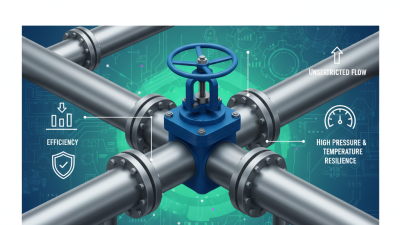
Choosing the right 6 inch gate valve for your plumbing needs can be challenging. This valve is essential in controlling water flow. Many options exist, and each has unique features. Understanding these can lead to better choices.
Consider materials, size, and pressure ratings when selecting a 6 inch gate valve. Materials like brass and stainless steel offer different durability. The valve must match your plumbing system's specifications. Pressure ratings are equally important. They ensure the valve can handle your system’s demands.
Mistakes can happen. A wrong choice can lead to leaks. These issues may result in costly repairs. Always double-check dimensions and compatibility. Reflecting on previous experiences can help avoid future errors. Taking your time in selection is crucial. This can save you headaches down the line.
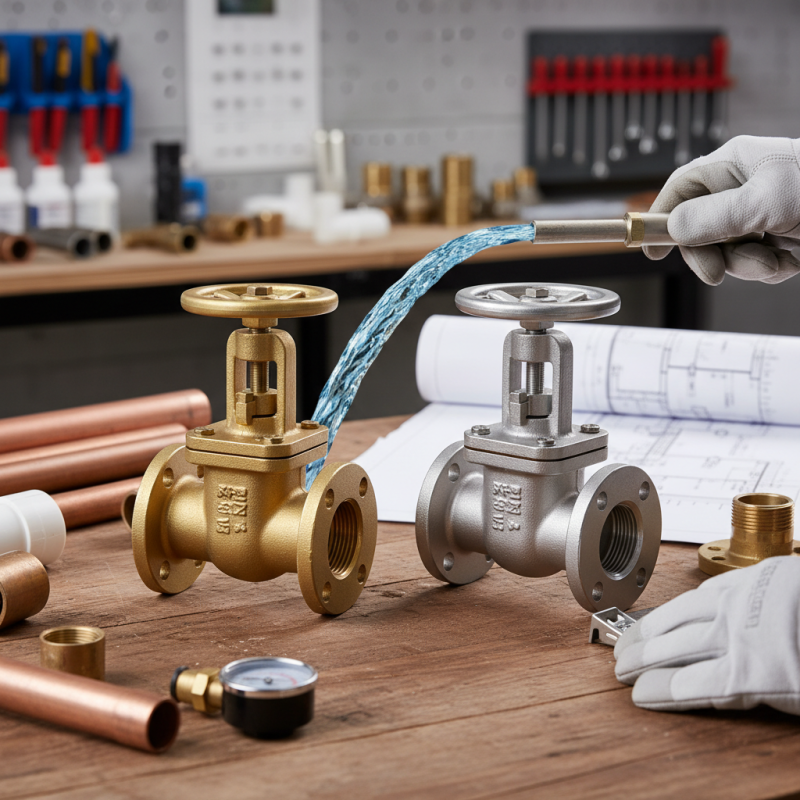
When it comes to plumbing, understanding the basics of 6-inch gate valves is crucial. These valves control water flow in various systems. They can handle high pressures and are often used in commercial settings. According to the Plumbing Research Council, around 70% of plumbing professionals prefer gate valves for larger pipe sizes due to their reliability and efficiency.
A 6-inch gate valve features a simple design with a wedge that opens and closes the flow. This design minimizes turbulence and friction. Reports indicate that improper installation can lead to leaks and system failures. Many professionals underestimate the importance of choosing the right valve materials, leading to corrosion and premature failure.
Choosing a gate valve requires more than just going for the size. Consider the materials that match your plumbing system. Metal options like brass and stainless steel are common, but plastic may also be suitable. Moreover, the actuation method is essential. Manual operation may fit smaller systems, while automated systems suit larger setups. A cautious approach will save time and costs.
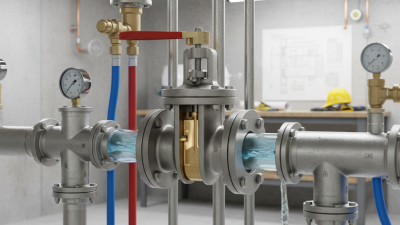
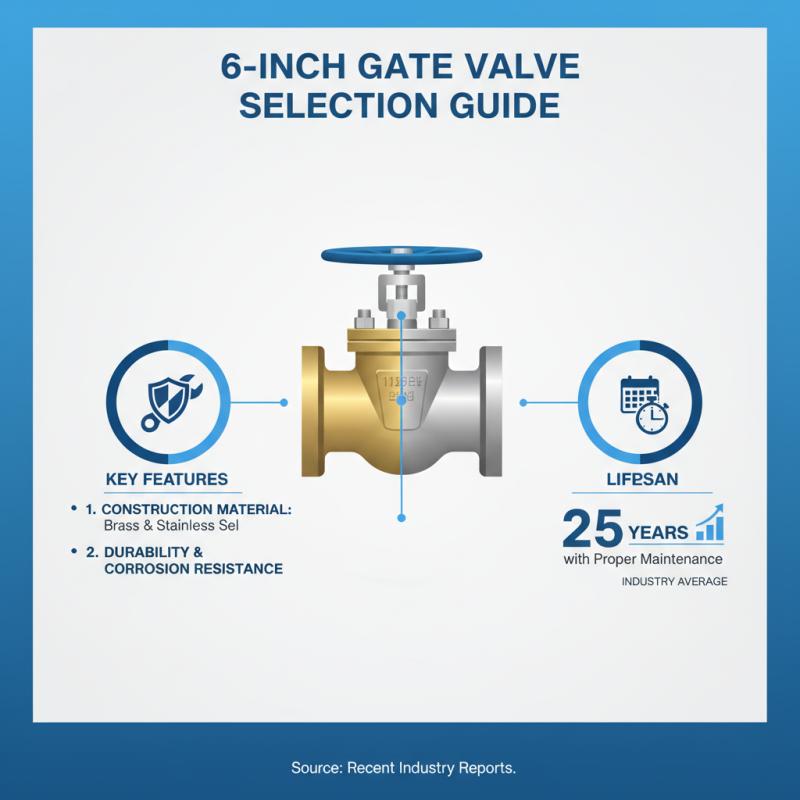
When selecting a 6-inch gate valve for plumbing needs, several key features must be considered. The valve’s construction material is crucial. Brass and stainless steel are common choices due to their durability and resistance to corrosion. According to recent industry reports, gates made from these materials typically last up to 25 years with proper maintenance.
Another important aspect is the valve's pressure rating. Ensure that the chosen valve can handle your system's maximum pressure. A gate valve rated for at least 150 psi is standard for many residential applications. Failure to use a properly rated valve can lead to costly leaks or system failures.
Tip: Always check the manufacturer's specifications. Many users overlook this, leading to misapplications.
Additionally, consider the type of seals used in the valve. Teflon seals are popular for their reliability, while rubber seals may degrade over time. A poor seal can lead to increased maintenance costs. Remember, not all gate valves are created equal.
Tip: Engage with professionals if unsure. Your plumbing system is an investment that requires attention to detail.
Finally, installation complexity varies. Some valves might need specific fittings or tools that can increase labor costs. Reflect on your project requirements before purchase. Sometimes, a more straightforward valve might be a better investment.
When selecting a 6 inch gate valve, material and construction are key factors. Common materials include bronze, stainless steel, and cast iron. Each has unique properties. Bronze offers excellent corrosion resistance, making it suitable for harsh environments. Stainless steel is robust and can handle high pressure and temperature. However, it can be more expensive. Cast iron is durable but can rust over time. Evaluating your specific needs is crucial.
Construction quality directly affects performance. Look for valves with strong, well-made bodies. Check the sealing mechanism as well. A poorly sealed valve can lead to leaks and inefficiencies. Some valves may not offer the best flow control, causing frustration later. Pay attention to the valve’s design. A streamlined design can enhance flow and reduce turbulence.
Don't overlook the importance of installation. A valve that is easy to install saves time and money. Examine whether the valve fits your existing plumbing. Compatibility issues can arise, leading to costly adjustments. Take time to research and consider all options. Each detail matters in making the right choice.
Choosing the right size and pressure rating for a gate valve is crucial for plumbing systems. A 6-inch gate valve is commonly used in various applications. These valves can control water flow in significant pipelines. The size affects the flow rate and pressure drops.
According to industry reports, proper sizing can improve efficiency by up to 20%. A valve that is too small may restrict flow. Conversely, a valve that is too large can lead to poor control. It's vital to match the valve size with the pipeline diameter and system requirements.
Pressure ratings are equally important. Standard ratings for gate valves often vary from 150 to 250 psi. Selecting the wrong pressure rating can result in leaks or failures. In 2021, studies showed that 30% of valve failures were due to improper pressure ratings. Always verify your pressure needs before purchasing. Making informed choices ensures system reliability and longevity.
| Dimension | Pressure Rating (PSI) | Material | End Connection Type | Operating Temperature (°F) |
|---|---|---|---|---|
| 6 Inch | 150 | Cast Iron | Flanged | -20 to 150 |
| 6 Inch | 300 | Stainless Steel | Welded | -50 to 300 |
| 6 Inch | 600 | Bronze | Threaded | -20 to 180 |
| 6 Inch | 150 | PVC | Socket Weld | -40 to 140 |
Maintaining a 6-inch gate valve is crucial for its longevity and efficiency. Regular inspections should be a part of your routine. Look for any signs of leaks around the valve. Rust or corrosion indicates potential issues. These small details can lead to bigger problems if ignored. Ensure the valve opens and closes smoothly. Sticking can be a sign of debris build-up. It’s essential to correct this before it causes further damage.
Lubrication is key, but use it sparingly. Over-lubrication can attract dust and grime. A soft cloth is perfect for wiping away any excess. Pay attention to the valve’s seal. Wear and tear can occur over time, leading to leaks. Replace seals when necessary, and always use the correct type for a proper fit. It’s better to be proactive than reactive. You might overlook minor issues, but they can escalate quickly.
Remember to check the environment around the valve. Exposed to extreme temperatures? It might affect performance. Fluctuating conditions could also lead to premature failure. Reflect on how often you actually inspect your valve. Neglect can be costly. A little effort goes a long way in ensuring your gate valve operates as it should.