
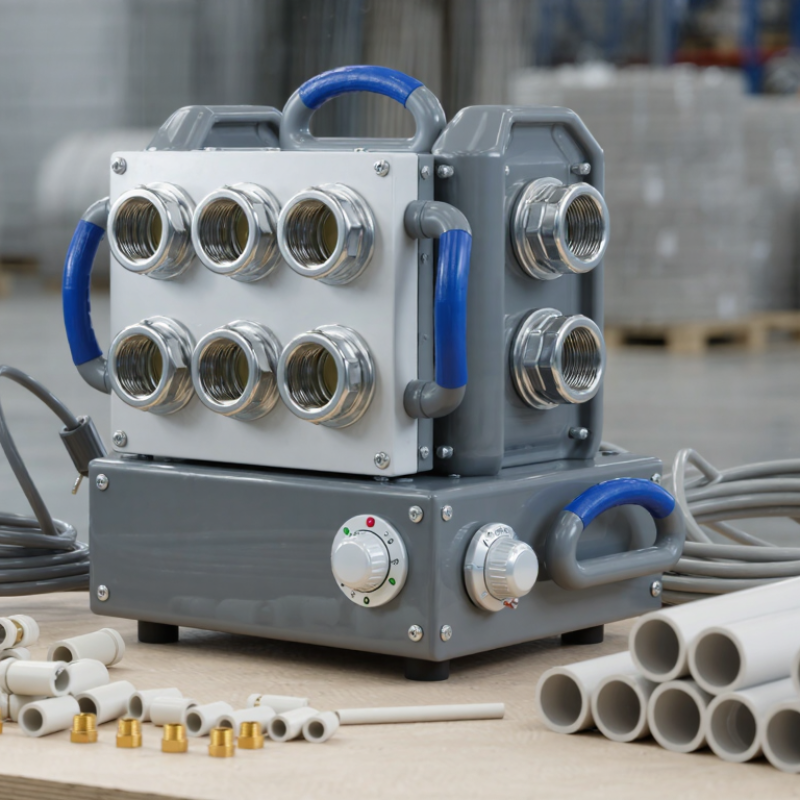
What Is a PPR Heater Machine and How Does It Work?
A PPR heater machine joins polypropylene pipes and fittings through controlled heat fusion. Its heated sockets soften the outer pipe surface and the fitting’s inner surface. The operator then connects both parts with steady pressure and correct alignment. Heat alone does not guarantee a reliable joint. Cooling control matters just as much.
For ISO 15874-compliant systems, the fused connection should cool without movement, bending, or external stress. A stable cooling period helps the softened material form a continuous joint. Experienced installers inspect the fusion bead, pipe insertion depth, surface cleanliness, and visible alignment. They also check the heating plate temperature with suitable instruments, rather than trusting a display blindly. A neat bead is reassuring, but it is not complete proof of quality. Installation records should include pipe size, heating time, ambient conditions, and operator observations. Small gaps in records can weaken confidence later.
Tips: Keep tools clean and dry. Cut pipes squarely. Avoid twisting during cooling. Reject joints with uneven beads, contamination, or poor insertion. Check the machine before work begins. Temperature variation may be easy to miss. That deserves reflection. A rushed connection can look acceptable while hiding internal weakness. When project requirements are strict, qualified personnel should verify procedures and test samples where appropriate.