
Choosing a reliable Shorts Legging Printer requires more than comparing machine prices. Global buyers must examine print quality, fabric compatibility, production speed, maintenance, and technical support. A bright sample may look impressive, yet poor stretch recovery can distort graphics on real leggings. That detail matters.
This guide reviews ten leading Shorts Legging Printer options for international buyers. It considers direct-to-fabric and transfer printing systems, including their strengths, limitations, and practical operating demands. Some machines suit small studios with flexible production schedules. Others support large factories producing thousands of athletic garments each month. Ink performance, drying control, color consistency, and software integration also influence the final result. These factors are easy to overlook.
Debbie McKeegan, a recognized digital textile printing specialist, has stated, “Digital printing is the future of textile printing.” Her view reflects a wider industry shift toward shorter runs, customized designs, and reduced material waste. However, digital printing is not automatically the best answer for every buyer. Energy use, operator training, spare parts, and local service coverage still deserve close attention. A low purchase price can become expensive after repeated downtime.
The rankings in this article are practical, not absolute. A printer that performs well in Europe may face support delays in another region. A growing business may also outgrow an entry-level system sooner than expected. Buyers should compare verified specifications, request fabric samples, and calculate total ownership costs. Careful testing remains essential. Mistakes happen, and supplier promises should never replace measurable evidence.
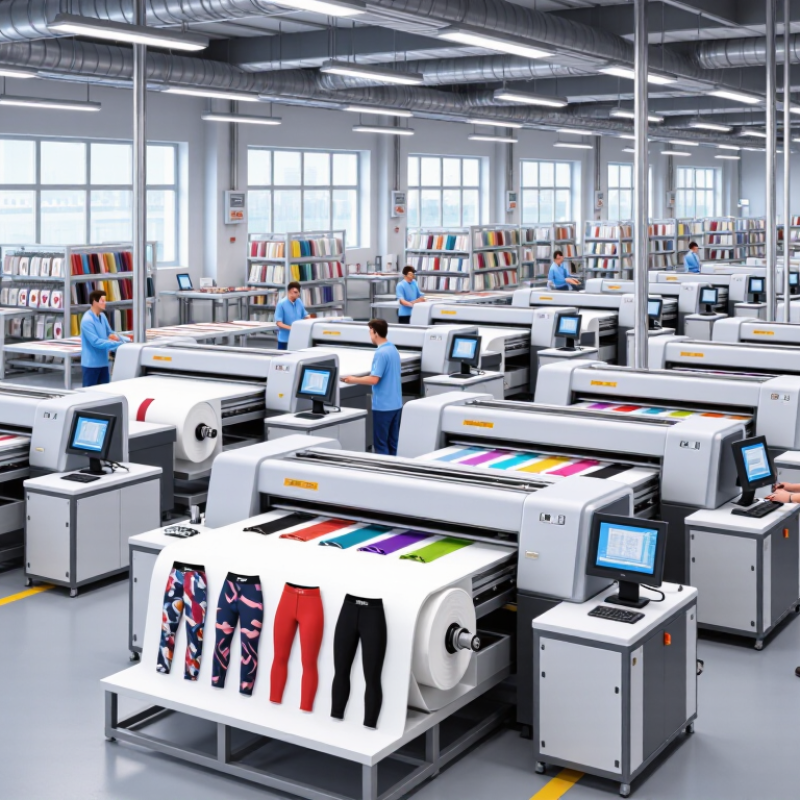
Top 10 Shorts Legging Printers for Global Buyers
Digital textile printing is entering a stronger growth phase. Smithers projects a 9.5% compound annual growth rate from 2023 to 2028. This forecast reflects wider demand for short runs, personalized sportswear, and faster sampling. For shorts and leggings, buyers should examine printer width, elastic-fabric handling, and color consistency. A machine may print a vivid test panel, yet perform differently across polyester blends.
Production experience shows that fabric preparation matters as much as printer speed. Stretch fabric can curl, shift, or absorb ink unevenly near seams. Printers with accurate tension control and reliable alignment reduce these defects. Digital systems also support smaller batches, limiting excess inventory and outdated designs. However, the 9.5% CAGR is a forecast, not a guarantee. Energy costs, maintenance skills, and regional import rules can change the business case. I have found that supplier claims often need testing under real workshop conditions.
Tips: Request a printed leg-panel sample, not only a flat swatch. Measure wash durability after repeated cycles. Check whether software supports color profiles for elastic textiles. Ask for service response times and spare-part availability. A lower purchase price can become expensive when calibration takes too long. Buyers should also record ink consumption, drying temperature, and production speed during trials. These details create a more reliable comparison between the top ten shortlisted printers.

Choosing among the top shorts legging printers requires more than comparing speed or advertised resolution. The printing method must match the fabric, artwork, order size, and expected washing conditions. No method wins every order.
Sublimation is usually the strongest choice for polyester leggings and full-color, all-over designs. The dye enters the fibers, so prints remain smooth and flexible during stretching.
DTF works across more fabric types and suits logos, names, and small batches. However, its transfer layer may feel noticeable on lightweight shorts.
DTG creates detailed images on cotton-rich garments, but it can lose consistency on highly elastic materials.
Screen printing offers strong coverage and excellent durability, although setup costs rise with multiple colors and complex artwork.
Tips: Request a physical sample before ordering internationally. Stretch it across the thigh area, then wash it several times. Check color accuracy, edge sharpness, print adhesion, and fabric recovery.
Ask the supplier for curing details, ink information, production tolerances, and export packaging standards. A printer may look efficient on paper but struggle with uneven pressure or registration. That is the uncomfortable part.
Test records matter more than confident promises. Also confirm size grading, labeling rules, and destination-market requirements before approving bulk production.
Top 10 Shorts Legging Printers for Global Buyers
A credible ranking must measure more than advertised speed. Smithers’ report, The Future of Digital Textile Printing to 2028, identifies productivity, color consistency, and operating cost as major buying factors. For legging production, resolution above 600 dpi usually supports cleaner logos and fine contours. Yet higher DPI can reduce speed. That trade-off matters.
Print width should match cutting plans, not showroom claims. A 1.6-meter machine may handle narrow panels efficiently, while wider systems reduce fabric joins. Throughput should be tested with actual polyester stretch fabric, including curing and setup time. A published rate of 60 square meters per hour can become 42 in daily production. Small detail, big difference.
Ink cost needs a measurable formula: ink used per square meter multiplied by purchase price. The International Color Consortium stresses controlled color workflows, because unstable profiles create waste and reprints. Smithers also reports that digital textile printing continues gaining share because it reduces preparation time for shorter runs. However, “lower waste” is not automatic. Dark leggings may require heavier white ink coverage, raising consumption sharply. My ranking would score DPI at 25%, usable width at 20%, verified throughput at 30%, and ink cost at 25%. This weighting is imperfect, but transparent tests are better than polished brochures.
Performance ranking based on DPI, print width, throughput, and estimated ink cost
The chart uses an indexed performance score from 0 to 100. Higher DPI, wider print width, and higher throughput improve the score, while lower ink cost improves the score. Hover over each bar to view the underlying commercial benchmark values.
For global buyers, shorts legging printers must prove more than sharp graphics. Fabric stretch, heat, sweat, and repeated washing can expose weak ink systems quickly. ISO 105-C06 evaluates colour fastness during domestic and commercial laundering. AATCC TM61 uses accelerated laundering conditions to reveal fading, staining, and migration. These tests are related, but they are not interchangeable. A professional supplier should identify the exact method, fabric composition, temperature, detergent, and rating scale.
Scale matters. Textile Exchange’s Materials Market Report 2024 estimated global fibre production at 124 million metric tonnes in 2023. It projects production may reach 160 million tonnes by 2030. More production means greater pressure to document chemical safety and durability. OEKO-TEX STANDARD 100 focuses on harmful substances and tests components, including prints, threads, and labels. Requirements vary by product class and are updated regularly. A certificate alone is not enough. Buyers should verify its scope, validity, and tested article.
Tips: Request wash-test reports from an independent laboratory. Keep pre-wash and post-wash samples beside each other. Check cracking after stretching the waistband. Ask whether testing covered the actual polyester-spandex blend. Record batch numbers and curing conditions. Do not rely on verbal claims. I have seen attractive samples fail after repeated washing. That risk deserves honest review. Suppliers may also need to repeat testing when inks, fabric mills, or production temperatures change.
Anonymous supplier profiles are ranked by process suitability, export readiness, material coverage, and quality-control practices. Capacity, MOQ, lead time, and test results are indicative market benchmarks; buyers should request current laboratory reports, certification scope, and production samples before placing an order.
| Rank | Anonymous Printer Profile | Primary Region | Recommended Printing Processes | Shorts Legging Fabrics | Indicative MOQ | Sample Lead Time | Bulk Lead Time | Color-Fastness Verification | OEKO-TEX Buyer Requirement | Global-Buyer Suitability |
|---|---|---|---|---|---|---|---|---|---|---|
| 1 | Profile A — High-Volume All-Over Printer | East Asia | Sublimation Digital transfer | Polyester and polyester-spandex blends; commonly 75–85% polyester with 15–25% elastane | 300–500 pieces per design | 5–8 working days | 18–28 working days | Submit reports against ISO 105-C06 and AATCC TM61; confirm wash temperature, cycle count, and rating scale | Request a valid OEKO-TEX STANDARD 100 certificate covering the finished printed garment and relevant product class | Strong for repeat collections and large international orders |
| 2 | Profile B — Recycled-Fabric Specialist | South Asia | Dye sublimation Water-based transfer | Recycled polyester and recycled polyester-elastane performance knits | 200–400 pieces per design | 7–10 working days | 22–32 working days | Verify color change and staining results after accelerated laundering under AATCC TM61 and domestic/commercial laundering under ISO 105-C06 | Check certificate validity, certificate number, product scope, and whether trims, inks, and transfer films are included | Suitable for sustainability-focused activewear programs |
| 3 | Profile C — Premium Small-Batch Studio | Western Europe | Direct-to-film Digital pigment | Nylon-spandex, polyester-spandex, and brushed interlock fabrics | 50–150 pieces per design | 4–7 working days | 12–20 working days | Require a production-lot test panel and wash evaluation; ISO 105-C06 and AATCC TM61 should be applied according to the agreed care label | Use OEKO-TEX documentation for the final garment rather than relying only on an ink or fabric declaration | Strong for fashion launches, sampling, and limited editions |
| 4 | Profile D — Seamless Activewear Printer | East Asia | Sublimation Engineered placement | Polyamide-spandex and polyester-spandex seamless knitted structures | 500–1,000 pieces per design | 8–12 working days | 25–35 working days | Test printed panels after stretch and laundering; include ISO 105-C06 and AATCC TM61 results for color change and staining | Confirm that elastane, dyes, auxiliaries, and printed components comply within the finished-product certification scope | Well suited to technical compression and seamless collections |
| 5 | Profile E — North American Compliance-Oriented Printer | North America | Screen print Water-based ink DTG | Cotton-spandex, polyester-spandex, and mixed-fiber athleisure fabrics | 100–250 pieces per design | 5–9 working days | 15–25 working days | Request third-party testing using the applicable ISO 105-C06 laundering procedure and AATCC TM61 accelerated laundering procedure | Require current OEKO-TEX STANDARD 100 evidence for ink, transfer materials, and finished products where applicable | Practical for North American fulfillment and shorter replenishment cycles |
| 6 | Profile F — European Digital Textile Facility | Southern Europe | Reactive digital Pigment digital | Polyamide, polyester, cotton, and blended stretch fabrics | 150–300 pieces per design | 6–10 working days | 20–30 working days | Agree on fiber-specific testing before production; record ISO 105-C06 and AATCC TM61 ratings by fabric and print color | Verify whether the certificate applies to the exact textile article, colorway, and production site | Suitable for varied fiber programs and multi-market compliance reviews |
| 7 | Profile G — Fast-Turn Customization Printer | South-East Asia | Sublimation DTF transfer | Polyester performance jersey and medium-to-high stretch polyester blends | 100–300 pieces per design | 3–6 working days | 14–22 working days | Do not accept visual approval alone; request wash-test data from the final substrate using ISO 105-C06 and AATCC TM61 | Request traceable OEKO-TEX documentation for inks, adhesives, films, and the finished product | Good for online customization and frequent design changes |
| 8 | Profile H — Integrated Cut-and-Sew Printer | South Asia | Sublimation Screen print Embossed transfer | Polyester-spandex, nylon-spandex, and recycled synthetic knits | 300–600 pieces per design | 7–11 working days | 24–36 working days | Test fabric, print, seams, and trims after laundering; retain ISO 105-C06 and AATCC TM61 reports by production lot | Check finished-garment certification and ensure the certificate covers all components that contact the wearer | Useful for buyers seeking one-stop manufacturing and printing |
| 9 | Profile I — Low-Impact Ink Specialist | Latin America | Water-based screen print Digital transfer | Cotton-spandex, modal blends, polyester-spandex, and lightweight jersey | 100–250 pieces per design | 6–9 working days | 18–28 working days | Confirm resistance to repeated laundering with both ISO 105-C06 and AATCC TM61 where the destination market requests both methods | Ask for current OEKO-TEX STANDARD 100 evidence and restricted-substance test records for printing chemicals | Appropriate for regional sourcing and mid-volume lifestyle collections |
| 10 | Profile J — Export-Ready Multi-Process Printer | Middle East and North Africa | Sublimation Screen print DTF transfer | Polyester, nylon, cotton blends, and elastane-containing activewear fabrics | 250–500 pieces per design | 7–12 working days | 22–34 working days | Specify method, wash conditions, number of cycles, gray-scale rating, and staining rating in the purchase specification | Validate the OEKO-TEX certificate through the issuing organization and match it to the production facility and article | Flexible for buyers managing multiple fabric types and destination markets |
For global buyers, a shorts legging printer should be scored beyond its advertised speed. Grand View Research estimates the digital textile printing market at about USD 4.2 billion in 2023, with double-digit annual growth expected through 2030. Demand is expanding, but capacity claims still need proof. Score production capacity at 35%. Check usable roll width, dark-fabric performance, daily output, curing speed, and average uptime. Request a live test using your own stretch fabric.
Service deserves 25% of the score. A fast machine becomes expensive when remote support crosses time zones or spare parts wait six weeks. Ask for installation training, response targets, technician coverage, and preventive-maintenance records. ITMF’s 2024 Global Textile Industry Survey continued to show pressure on textile orders and margins, making downtime harder to absorb. Small delays matter. Warranty receives 15%. Review printhead coverage, exclusions, replacement terms, and whether labor is included. A one-year warranty may look acceptable, but hidden exclusions can weaken it.
Allocate 25% to ROI. Measure ink use per garment, electricity, labor, rejected pieces, maintenance, and financing costs. The WTiN Digital Textile Report highlights automation and shorter production cycles as major adoption drivers. That supports digital printing, but not every printer earns back its cost quickly. Compare total ownership cost over three years, not only purchase price. My scoring model is useful, yet imperfect; local freight, operator skill, and fabric waste can distort the result. Leave room for a pilot order. Test ten wash cycles, inspect waistband stretch, and record color consistency before signing.