
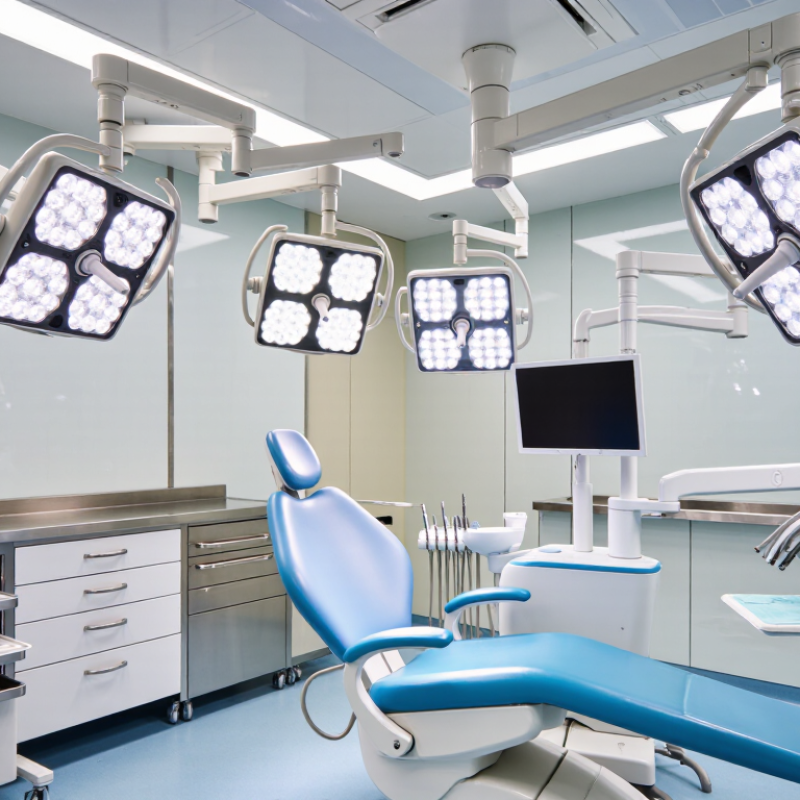
Dental lights made in China increasingly combine practical engineering with flexible production.
In a working clinic, the light should illuminate the oral cavity without tiring the dentist’s eyes. Modern LED systems usually offer stable brightness, low heat, and adjustable color temperature. High color rendering helps clinicians distinguish soft-tissue shades and small surface changes.
Good dental lights also use multi-reflector designs to reduce shadows around instruments and hands. Some models include non-contact sensors, smooth dimming, and detachable handles for easier disinfection.
A balanced arm matters too. It should move quietly, hold its position, and resist gradual drifting during treatment. Small details matter. A loose joint can become frustrating.
Chinese manufacturers often support customized mounting options, voltage requirements, and control layouts.
However, specifications alone do not prove clinical reliability. A buyer should review test reports, electrical safety documents, material information, and production quality records. Factory inspection can reveal uneven finishing, weak cable protection, or controls that feel unreliable.
A lower price is useful, but it may hide maintenance costs. No light is perfect. Some high-CRI LEDs may provide less brightness, while very bright settings can create glare.
Dental teams should test the light in a real operatory, with gloves, instruments, and a patient chair, before making a final decision.