Choosing the best grease for grease gun work is not simply a choice between lithium, calcium, or synthetic formulas. The correct product must match load, speed, temperature, water exposure, and the equipment manufacturer’s instructions. Small details matter.
The National Lubricating Grease Institute’s annual Grease Production Survey shows how widely grease formulations and production volumes vary across industrial markets. That variation explains why one popular cartridge cannot serve every bearing, chassis joint, or agricultural machine. NLGI GC-LB classifications, ASTM D4950 requirements, and ISO 6743-9 categories provide useful technical reference points. They help buyers compare performance instead of trusting vague packaging claims. However, a classification is not a universal recommendation.
Field maintenance guidance from SKF and Machinery Lubrication also emphasizes contamination control, correct relubrication intervals, and avoiding incompatible thickeners. A high-temperature bearing may need a polyurea or synthetic grease, while a slow, heavily loaded pin may require a high-viscosity extreme-pressure formula. The wrong grease can cause noise, overheating, leakage, or premature wear. That choice matters.
This 2026 guide examines grease types, NLGI grades, base oils, thickener compatibility, and real operating conditions. It also considers cartridge handling, cold-weather pumping, and grease-gun pressure. Some recommendations remain imperfect because equipment histories are often incomplete. That is worth admitting. A product labeled “premium” may still fail when contamination, overgreasing, or incorrect storage is ignored. Readers should verify the equipment manual, consult the grease manufacturer’s technical data sheet, and treat this guide as a practical decision framework rather than a substitute for professional lubrication analysis.
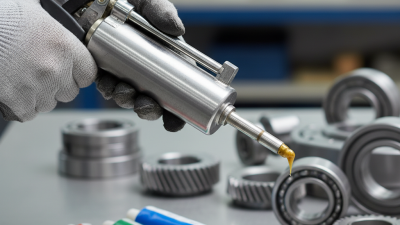
Grease in a grease gun is more than a slippery material. It forms a protective film between moving metal parts, reducing friction, heat, and wear. This film stays in place better than ordinary oil during slow, heavily loaded movement. It also helps seal out dust, water, and small metal particles around bearings, pins, and bushings.
The correct grease depends on the machine, operating temperature, load, and existing lubricant. A softer grease may flow easily through narrow passages, while a firmer grade can remain inside a joint under pressure. Grease thickener and base oil also affect performance. Mixing incompatible greases may cause separation or hardening. I have seen neglected joints accept grease slowly, even when the gun worked correctly. That usually signals a blocked fitting, damaged seal, or hardened old grease. Guessing is not a maintenance method.
Tips: Wipe the fitting before connecting the coupler. Add grease slowly until fresh grease appears, or follow the equipment manual. Stop if the seal begins to swell or pressure rises sharply. Check the grease label for temperature range and consistency grade. Keep the gun clean and capped between uses. A small amount applied regularly often works better than forcing a large amount after months of neglect. Even experienced technicians can overgrease a bearing, so measured strokes and maintenance records are worth using.
| Grease Type | Common NLGI Grades | Typical Temperature Range* | Water Resistance | Load and Pressure Performance | Common Grease-Gun Applications | Main Advantages | Important Limitations |
|---|---|---|---|---|---|---|---|
| Lithium Grease | NLGI 1–3 | Approximately −20°C to 130°C (−4°F to 266°F) |
Moderate | Good general-purpose performance for moderate loads and speeds | Chassis points, plain bearings, hinges, general machinery, and light automotive service | Widely available, versatile, and suitable for many ordinary lubrication points | Usually less water-resistant and less temperature-stable than complex-soap greases |
| Lithium Complex Grease | NLGI 1–3 | Approximately −20°C to 150°C (−4°F to 302°F) |
Good | Good load-carrying ability with improved high-temperature stability | Wheel bearings, universal joints, construction equipment, agricultural equipment, and general industrial machinery | Balanced choice for high temperature, load, and multipurpose service | May not be the best choice for continuously wet or heavily contaminated environments |
| Calcium Sulfonate Complex Grease | NLGI 1–2 | Approximately −20°C to 160°C (−4°F to 320°F) |
Excellent | Very good extreme-pressure, anti-rust, and corrosion-protection performance | Marine equipment, construction machinery, agricultural equipment, exposed pins, bushings, and wet service points | Strong water resistance and corrosion protection; often performs well under heavy loads | Can be incompatible with some existing greases; clean and purge old grease when required |
| Aluminum Complex Grease | NLGI 1–2 | Approximately −20°C to 150°C (−4°F to 302°F) |
Very good | Good tackiness, load resistance, and protection against water washout | Food-processing equipment where an applicable food-grade formulation is specified, conveyors, fittings, and wet industrial environments | Good adhesion and resistance to water; some formulations provide high-temperature capability | Performance varies significantly by formulation; compatibility must be checked before mixing |
| Polyurea Grease | NLGI 1–3 | Approximately −20°C to 175°C (−4°F to 347°F) |
Good to very good | Excellent oxidation stability and good high-speed bearing performance | Electric-motor bearings, sealed-for-life bearings, high-speed bearings, and elevated-temperature applications | Long service life and strong resistance to oxidation at elevated temperatures | Compatibility with other thickener systems can be poor; do not mix without confirmation |
| Clay or Bentonite Grease | NLGI 1–2 | Often suitable above 120°C (248°F), depending on formulation |
Variable | Can resist high temperatures, but load performance depends heavily on additives and formulation | Selected high-temperature applications where a non-melting grease is specifically required | Does not have a conventional soap dropping point and may remain in place at high temperatures | Not automatically suitable for bearings; can have limited water resistance and poor compatibility with soap-based greases |
How grease works in a grease gun: A grease gun pressurizes semi-solid lubricant and delivers it through a fitting into a bearing, bushing, joint, or other lubrication point. The base oil reduces friction and wear, while the thickener holds the oil in place and helps prevent leakage. Always follow the equipment manufacturer’s specification for grease type, NLGI grade, temperature range, and relubrication interval. Do not mix different grease types unless compatibility has been verified.