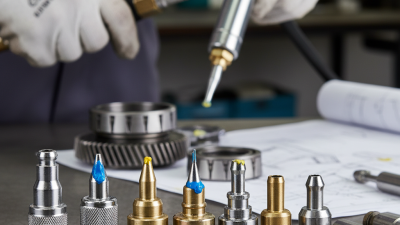
In 2026, grease fittings remain small but important parts of routine equipment maintenance. They provide a controlled point for adding lubricant to bearings, joints, and other serviceable components. Choosing the right style can make access easier and reduce mess. It is not always obvious from a catalog photo.
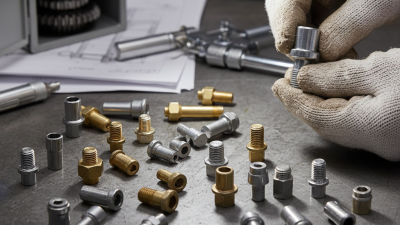
Common options include straight, angled, button-head, flush, and drive-in fittings. Straight fittings suit open, accessible locations. Angled 45- or 90-degree fittings can help a grease gun reach around nearby parts. Small parts, real consequences. Button-head designs offer a broader connection point for compatible couplers, while flush fittings sit close to the surface where clearance is tight. Drive-in styles are used in certain applications, but they are not interchangeable with threaded fittings.
This guide compares these types by shape, connection, access, and typical use. It also considers thread standards and materials, since the correct choice depends on the equipment maker’s specifications and operating conditions. A grease gun that fits poorly can leak lubricant or damage the fitting. Check the component manual before replacing one, and confirm thread size rather than guessing. Even a familiar-looking fitting may differ in subtle ways. That detail is easy to overlook. The best option is not necessarily the most specialized one; it is the fitting that matches the equipment and allows reliable servicing.
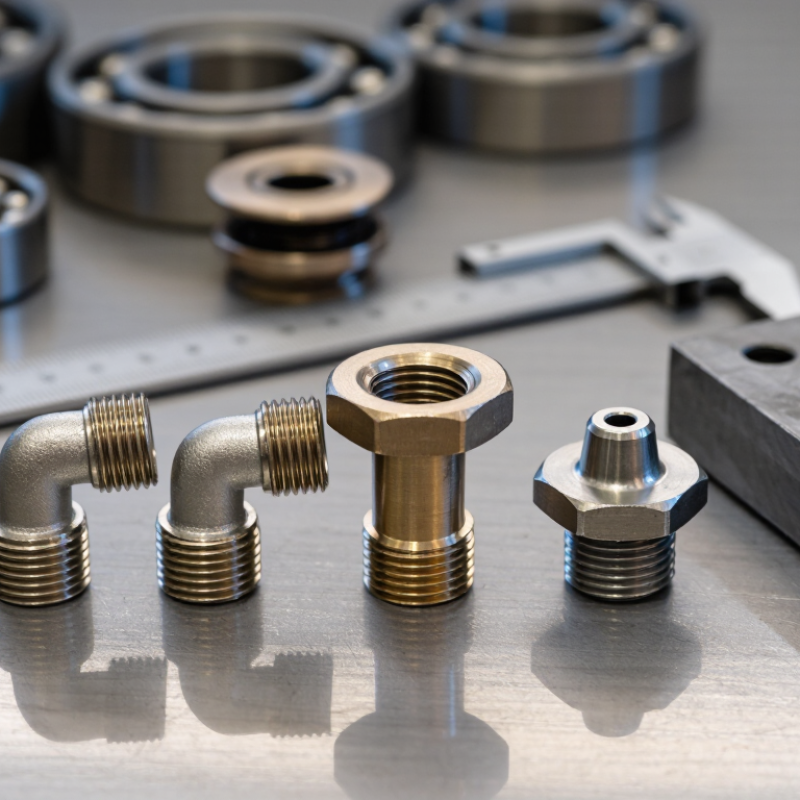
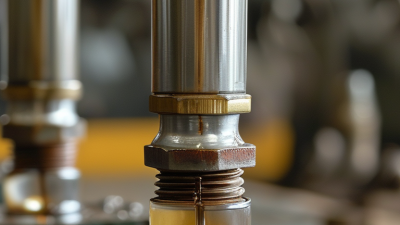
A grease fitting is a small valve that connects a grease gun to a machine’s lubrication point. Its threaded base anchors it to a housing, while the rounded head accepts the gun’s coupler. Inside, a spring-loaded ball acts as a check valve. Grease pressure pushes the ball inward and opens a passage; when pressure stops, the spring seats the ball again. A simple design. A useful one.
Straight fittings suit open, easy-to-reach points. Angled 45- or 90-degree fittings help when a frame or guard blocks direct access. Flush and button-head styles can work well in tight or exposed areas, provided the grease gun has a matching coupler. The right choice depends on access, thread size, operating pressure, and the machine maker’s service instructions. Shape alone does not tell the whole story.
During lubrication, clean the fitting head before coupling the gun. Dirt pushed through the passage can damage a bearing or bushing, even when the fitting looks sound. Apply grease slowly and watch for resistance, a seal movement, or another service indicator. More grease is not always better. If the ball sticks, grease leaks around the base, or the coupler will not seat, stop and inspect the part. A fitting can be overlooked; I have seen that small oversight complicate an otherwise routine service.
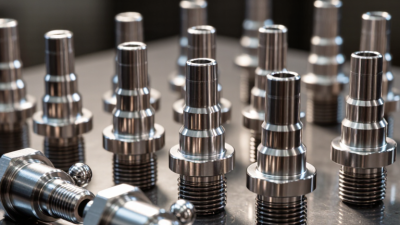
Common fitting styles include straight, 45-degree, and 90-degree designs. Their nominal angles describe the fitting’s outlet direction and help users select an access angle for a lubrication point.
The chart compares nominal body angles, not lubrication performance. Each fitting provides a connection point for applying grease through a compatible grease gun; the best style depends on access and installation geometry.
Grease fittings are often classified by shape and how they attach to equipment. Straight fittings suit open, easy-to-reach points. Angled fittings, commonly set at 45 or 90 degrees, help when a machine frame blocks direct access. Button-head fittings have a broad, flat top for use with compatible couplers, often on equipment requiring higher-volume lubrication. Small differences matter. A fitting that clears a bracket when the machine is still may be awkward to reach during routine servicing.
Mounting method is another useful distinction. Threaded fittings screw into a matching port, so check thread size and type before installation. Drive-in fittings press into a prepared opening and are common where a threaded port is unavailable. Some applications use fittings secured by a nut through a panel. These styles are not interchangeable; the port design and equipment instructions should guide selection. In practice, dirt around a fitting can also affect coupling, so clean the area before applying grease.
Tips: Check clearance with the grease gun attached, not just by eye. Confirm the port’s mounting style and thread specifications. If a fitting feels loose or resists installation, stop and verify compatibility rather than forcing it. A small mismatch is easy to overlook.
Common grease fitting types in 2026 include straight, angled, button-head, and flush designs. Straight fittings suit open, easy-to-reach lubrication points. A 45- or 90-degree fitting can help when a housing or frame blocks a grease gun. Small change, better access. Button-head fittings have a broad head that accepts a matching coupler, often useful where equipment needs frequent greasing. Flush fittings sit close to the surface, reducing snagging in tight or exposed locations.
Choosing a fitting starts with the equipment’s thread, working pressure, and available clearance. A fitting that looks right may still have the wrong thread. Check the machine manual or confirm the original dimensions before replacing one. On farm machinery, for example, a recessed point may call for an angled fitting, while a large bearing may use a button-head design. The application matters more than the fitting’s popularity.
Keep the fitting clean before attaching the grease gun; grit can enter the lubrication passage. Keep it clean. Also check for a loose base, damaged threads, or a blocked passage. If grease will not flow, adding more force is not always the answer. The fitting may be clogged, or the bearing may need inspection. That distinction is easy to miss during routine maintenance.
When a grease point faces heavy pressure or sits behind a guard, a standard straight fitting may be difficult to reach. High-pressure applications often use robust fittings with secure threads and a spring-loaded ball check. The check helps keep dirt out and grease in. Match the fitting’s pressure rating and thread to the equipment, not just its shape.
Space is tight. For restricted access, 45- or 90-degree angle fittings can bring the nipple into view of a grease gun coupler. Extended fittings and short remote grease lines can move the service point beyond a frame or shield. Button-head fittings suit some heavy-duty systems, especially where a larger coupler is practical. They are not automatically better; clearance and the lubrication schedule still matter.
Before installation, clean the surrounding surface and confirm that the coupler seats firmly. A poor connection can leak, damage the fitting, or make pressure readings misleading. In practice, the neatest layout is not always easiest to service. I would leave room for gloved fingers and a straight hose approach, even if the routing looks less tidy. Check for leaks after greasing, and replace damaged caps or fittings promptly.
| Fitting Type | Design and Common Connections | Best Access Conditions | Practical Strengths | Selection Notes |
|---|---|---|---|---|
| Straight hydraulic (zerk) fitting | Straight body with a spring-loaded ball check; commonly supplied with tapered pipe or straight thread options, including NPT, UNF, and metric threads. | Open, direct access where a grease-gun coupler can be aligned with the fitting. | Common general-purpose choice; the ball check helps limit contaminant entry and grease backflow. | Confirm thread type, size, and seat requirements. The fitting’s allowable pressure depends on its design and manufacturer specification. |
| 45-degree angled fitting | Hydraulic-style fitting with the outlet set at approximately 45 degrees to the mounting axis. | Moderately restricted locations where a straight fitting would be difficult to couple. | Can improve coupler alignment around nearby structure while retaining a familiar grease-gun connection. | Check clearance for both the fitting and the grease-gun coupler; angled versions are available in different thread and base styles. |
| 90-degree angled fitting | Hydraulic-style fitting with an outlet at approximately 90 degrees to the mounting axis. | Side-access locations, recessed assemblies, or points obstructed directly above. | Redirects the lubrication point toward a more accessible position without requiring a straight approach. | Verify that the bend does not interfere with moving parts. Select a fitting and installation method rated for the application. |
| Button-head fitting | Large, broad-headed design used with a matching button-head coupler; available in straight and angled forms. | Equipment requiring frequent lubrication, larger grease flow, or a robust coupling surface. | The broad head provides a substantial engagement area and is commonly used with dedicated high-volume lubrication equipment. | Use the matching coupler. Button-head geometry alone does not establish a pressure rating; check the fitting and coupler specifications. |
| Flush-type fitting | Low-profile fitting installed nearly flush with the surrounding surface; usually serviced with a compatible flush-fitting coupler. | Very tight-clearance locations where a projecting nipple could be struck or obstructed. | Minimizes protrusion and can help protect lubrication points in compact or exposed assemblies. | Requires a compatible service coupler and accurate alignment. Confirm the fitting’s sealing method and installation dimensions. |
| Extended or long-reach fitting | Elongated body or extension that positions the check-valve head away from the mounting surface; may be straight or angled. | Recessed grease ports, guarded equipment, or locations set behind a bracket or housing. | Moves the service point outward to make coupling easier without relocating the original lubrication port. | Check exposed length, vibration, impact risk, and thread engagement. Long extensions may need additional support in severe service. |
| Drive-type fitting | Barbed or serrated shank pressed or driven into a correctly sized prepared hole rather than installed in a threaded port. | Applications designed for a press-fit lubrication point, including some housings without tapped ports. | Can provide a compact installation where compatible hole geometry and material allow a secure fit. | Not interchangeable with threaded fittings. Hole size, material, retention, and operating conditions must match the fitting specification. |
| Threaded metric or specialty-thread fitting | Fitting manufactured with a specified metric or other non-default thread form; may have straight, angled, or extended geometry. | Equipment with a defined port standard or imported machinery using metric lubrication points. | Provides correct thread engagement when the port is not compatible with common inch-series threads. | Identify thread diameter, pitch, and form before installation. Do not force a near-matching thread into the port. |
Choosing a grease fitting starts with the machine, not the fitting’s shape. Straight fittings suit open, easy-to-reach grease points. A 45- or 90-degree fitting can help when a frame or guard blocks a straight coupling. For heavy equipment with frequent lubrication, a button-head fitting offers a larger connection surface. Flush fittings sit close to the component, reducing snag risk in tight spaces.
Check the thread type and size against the equipment’s service information. Metric and inch-based threads may look similar but are not interchangeable. Then consider operating pressure, exposure to dirt, and available clearance for the grease gun. A fitting that works on a sheltered pivot may fail to stay clean near road debris. A quick visual match can fool you; measuring the thread is worth the extra minute. I would not assume an old fitting is correct just because it screws in.
Tips: Clean around the port before removal, and use a fitting rated for the application. Confirm the replacement seals properly without forcing it. Keep the grease gun aligned. Small details matter. If access remains awkward, an angled fitting may help, but check that it does not contact moving parts.